
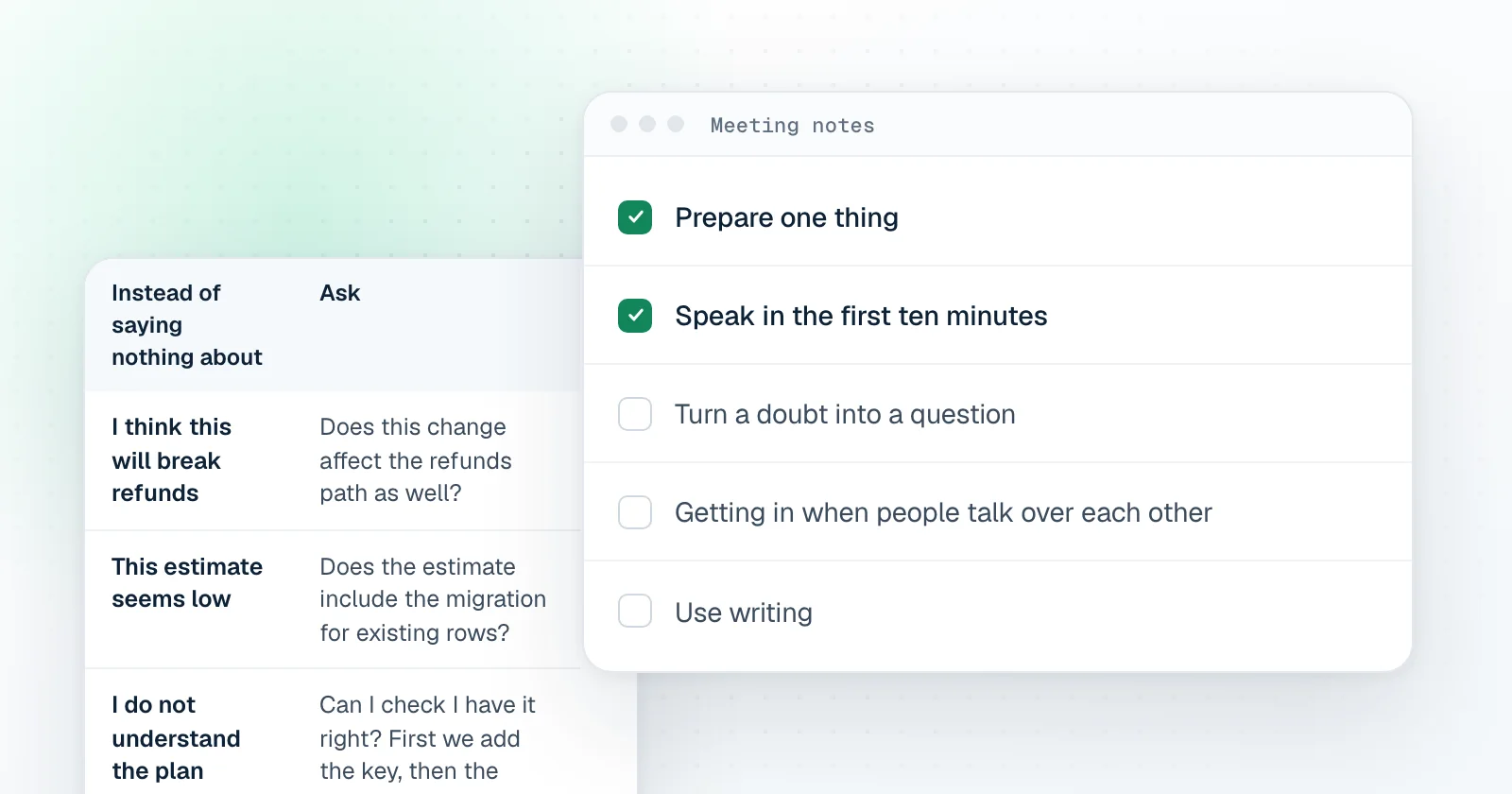
Prepare one thing
Before the meeting, write down one point you want to make or one question you want answered. Just one. It is much easier to speak when you already know what you will say, and one contribution per meeting is enough to change how people see you.
Speak in the first ten minutes
The longer you wait, the harder it gets, and the more the conversation moves past your point. Say something early, even something small: agreeing with someone and adding one fact counts. After that, the second time is easy.
Turn a doubt into a question
| Instead of saying nothing about | Ask |
|---|---|
| I think this will break refunds | Does this change affect the refunds path as well? |
| This estimate seems low | Does the estimate include the migration for existing rows? |
| I do not understand the plan | Can I check I have it right? First we add the key, then the retry? |
A question is easier to say than a disagreement, and people answer it instead of defending against it. Often it makes the same point.
Getting in when people talk over each other
- Use the raise hand button in the call. Most facilitators watch for it.
- Start with the person's name: "Sam, can I add one thing to that?"
- Write it in the chat. Many points that are hard to say out loud are easy to type.
- Ask the person running the meeting beforehand to bring you in on a topic you know well.
Use writing
Quiet people often write better than they speak in the moment. Send your view before the meeting, or a short note after it with the point you did not get to make. Teams that read are often fairer to quiet people than teams that only talk.
If you are the one who talks a lot
Ask the quietest person directly, by name, with an open question: "Priya, you know this code best. What are we missing?" Then wait, and do not fill the silence. It is the cheapest way to make your meetings better.