
Say it at the start
One sentence removes most of the pressure: "English is my second language, so I may ask you to repeat a question." Interviewers hear it as professional, and from then on asking for a repeat costs you nothing.
Phrases that buy time
- "Let me make sure I understood. You are asking about how I handled the disagreement, is that right?"
- "Could you say that another way?"
- "Give me a moment to think about that."
- "I do not know the exact word in English. What I mean is this."
Slow down on purpose
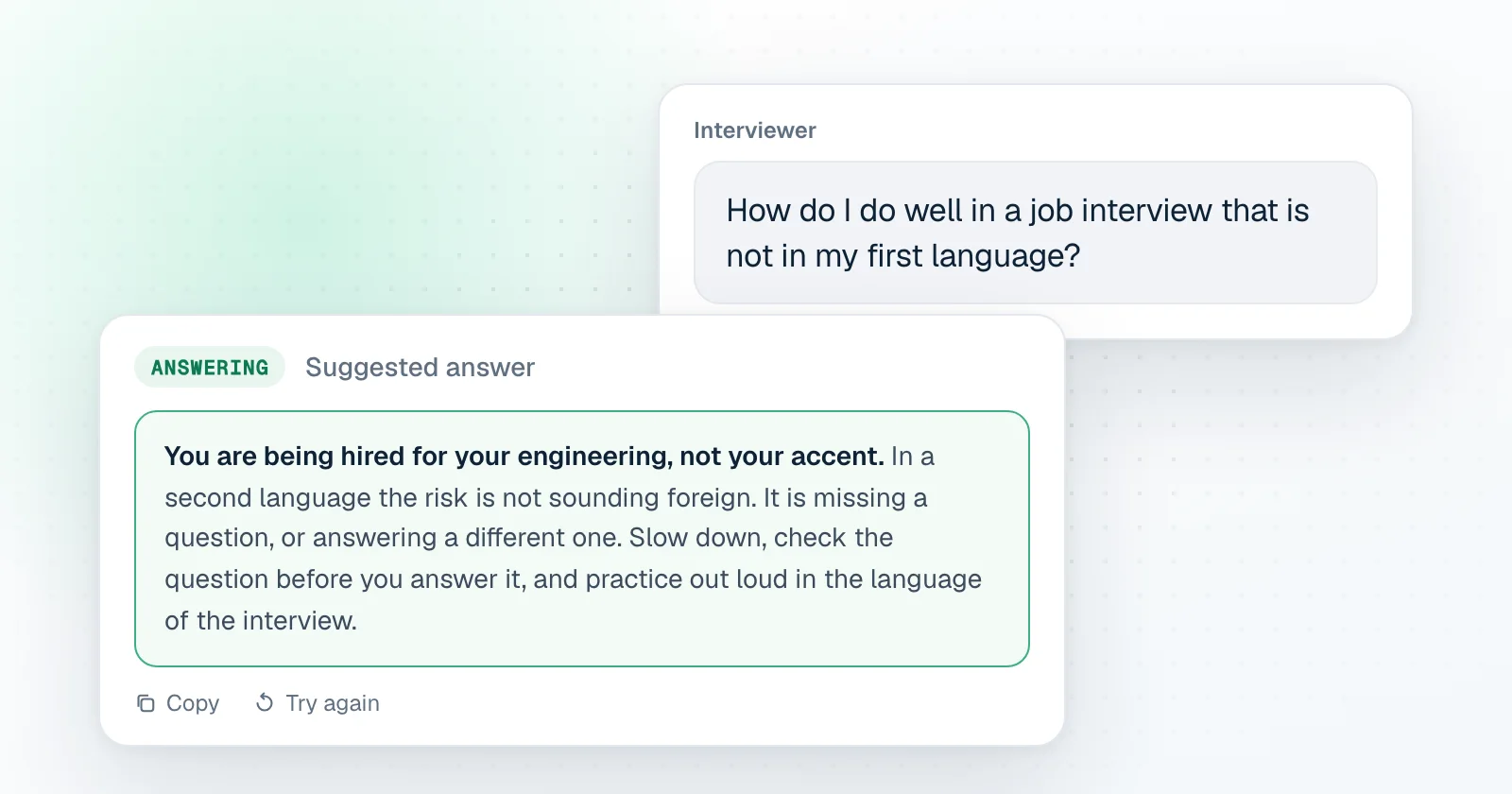
Nervous speakers speed up, and speed is what makes an accent hard to follow. Speak more slowly than feels natural. Short sentences with one idea each are easier to say and easier to hear.
Prepare the vocabulary of your own work
- Write down the twenty words you need to describe your last two projects.
- Check how the technical terms are said aloud. Many are read differently from how they are written.
- Prepare your stories in the language of the interview, not translated on the spot.
Practice out loud, in that language
Reading and listening do not train speaking. Answer five common questions aloud every day for a week. Record one answer and listen to it once. It is uncomfortable, and it is the fastest improvement there is.
During the technical part
Write key terms and numbers down as you hear them. In a coding round, restating the problem in your own words is good practice for everyone. For you it is also the check that you understood it.