
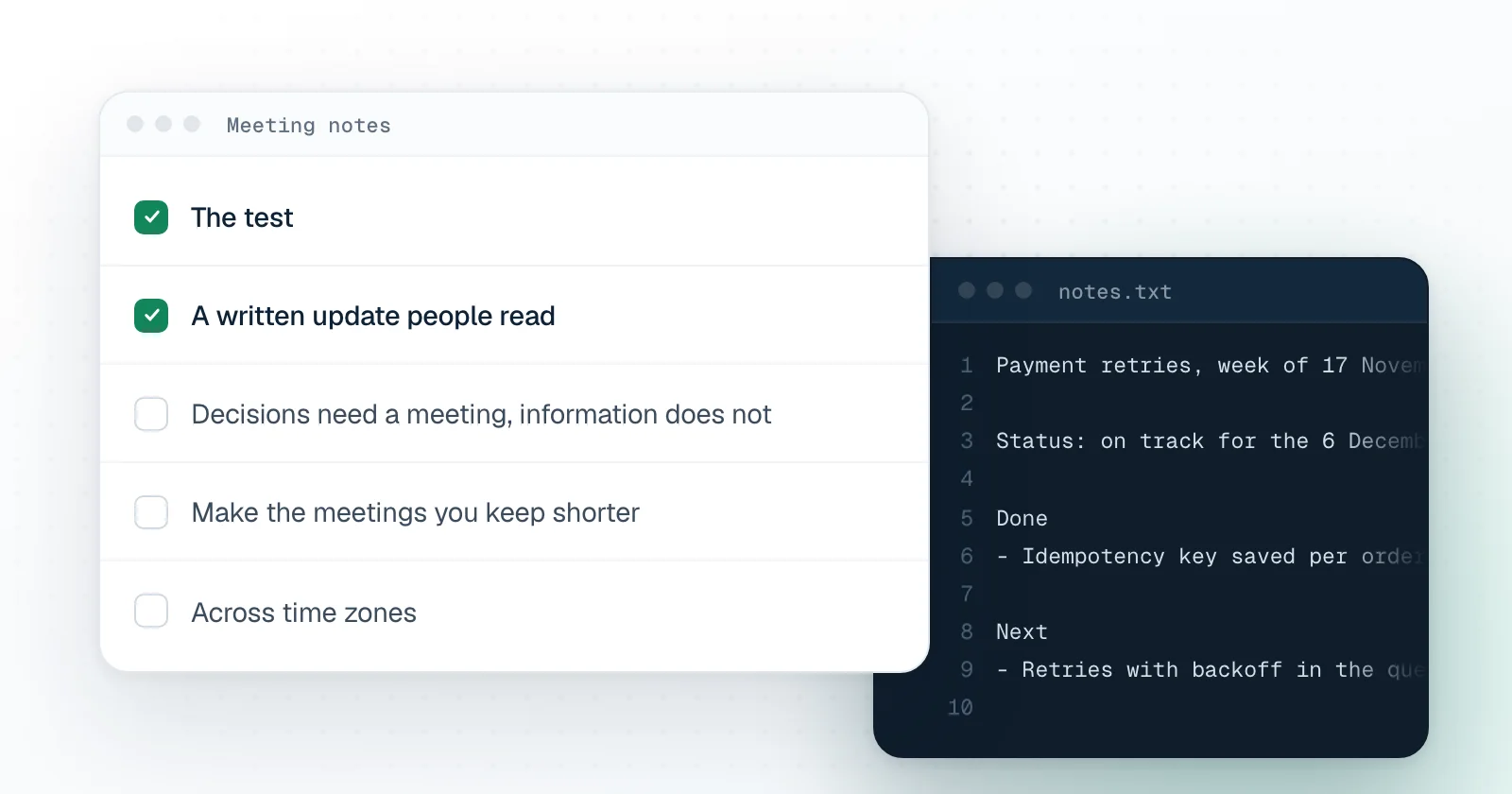
The test
| If the goal is to | Prefer |
|---|---|
| Pass on status or news | A written update |
| Collect opinions | A document people comment on |
| Decide between options people disagree about | A meeting, with the options written down first |
| Untangle something confusing quickly | A short call |
| Deliver difficult news, or build trust | A meeting, in person or on video |
A written update people read
Payment retries, week of 17 November

Status: on track for the 6 December release behind a flag.

Done
- Idempotency key saved per order and sent with every charge.

Next
- Retries with backoff in the queue worker.

Needs a decision
- Should failed retries email the customer? (Product, by Friday)

Risks
- The provider has not confirmed its retry limit per card.
Status in the first line, decisions clearly marked, nothing longer than a screen. If people have to scroll to find what they need, it will not be read.
Decisions need a meeting, information does not
A written thread is a poor place to settle a real disagreement: people write longer and longer replies and nobody moves. If a thread has gone back and forth three times without progress, stop and book twenty minutes. Write the outcome back into the thread afterwards.
Make the meetings you keep shorter
- Send the agenda and the reading before, and start with the decision, not the background.
- Invite the people who decide and the people who know. Others can read the notes.
- Book 25 or 50 minutes instead of 30 or 60, so people can get to the next one.
- End with the decisions and action items read out loud.
Across time zones
When there is no hour that suits everyone, rotate the inconvenient time so it is not always the same people, record the outcome in writing, and keep live meetings for decisions only. A team that is mostly asynchronous still needs to talk sometimes. A monthly call where people can just be colleagues does more than it seems.
Do not overcorrect
Replacing every meeting with documents has its own cost. People stop talking, misunderstandings last longer, and new team members never get to know anyone. The goal is fewer meetings that each have a clear reason, not no meetings.