
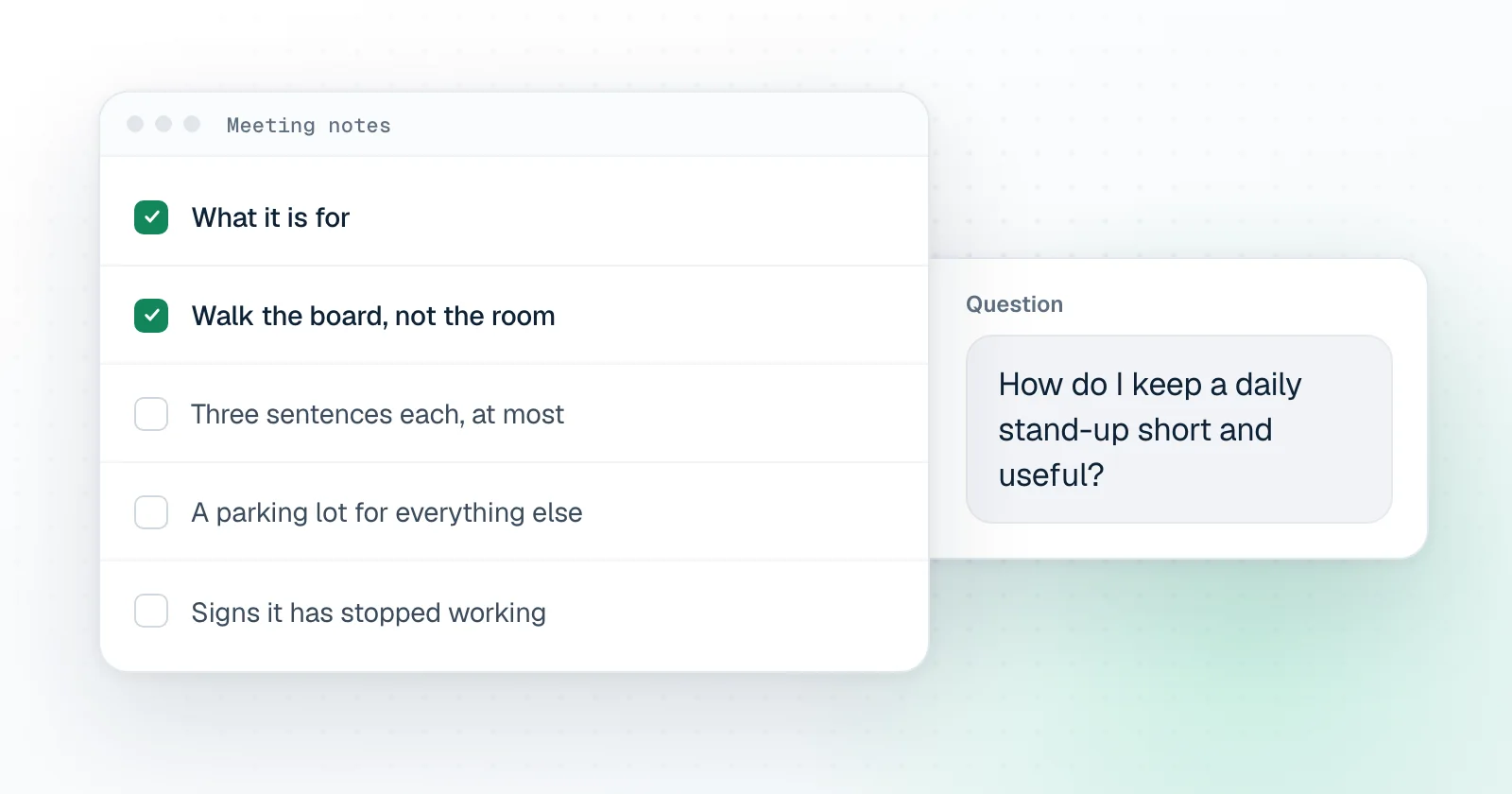
What it is for
- Finding work that is stuck.
- Finding two people who need to talk and do not know it yet.
- Noticing early that the plan for the week is slipping.
It is not for reporting hours, proving you were busy or solving problems. Those have better places.
Walk the board, not the room
Go through the work from the item closest to done back to the item just started. For each one, ask a single question: what does this need to move today? People who have nothing blocked say nothing, and that is a good stand-up.
Three sentences each, at most
- What moved since yesterday.
- What moves today.
- What is in the way.
If someone needs a fourth sentence, the topic needs its own conversation.
A parking lot for everything else
The moment two people start solving something, say "after the stand-up" and write the topic down. When the stand-up ends, the people who need that conversation stay and everyone else leaves. This one habit is what keeps it at ten minutes.
Signs it has stopped working
- People talk to the manager instead of to each other.
- Nobody ever mentions a problem.
- The same item has been almost done for a week.
- It regularly runs past fifteen minutes.
When to make it written
If the team is spread over time zones, or the meeting has become a ritual, replace some days with three written lines in a shared channel. Keep at least one spoken stand-up a week, because blocked work is easier to hear in a voice than to read in a message.