
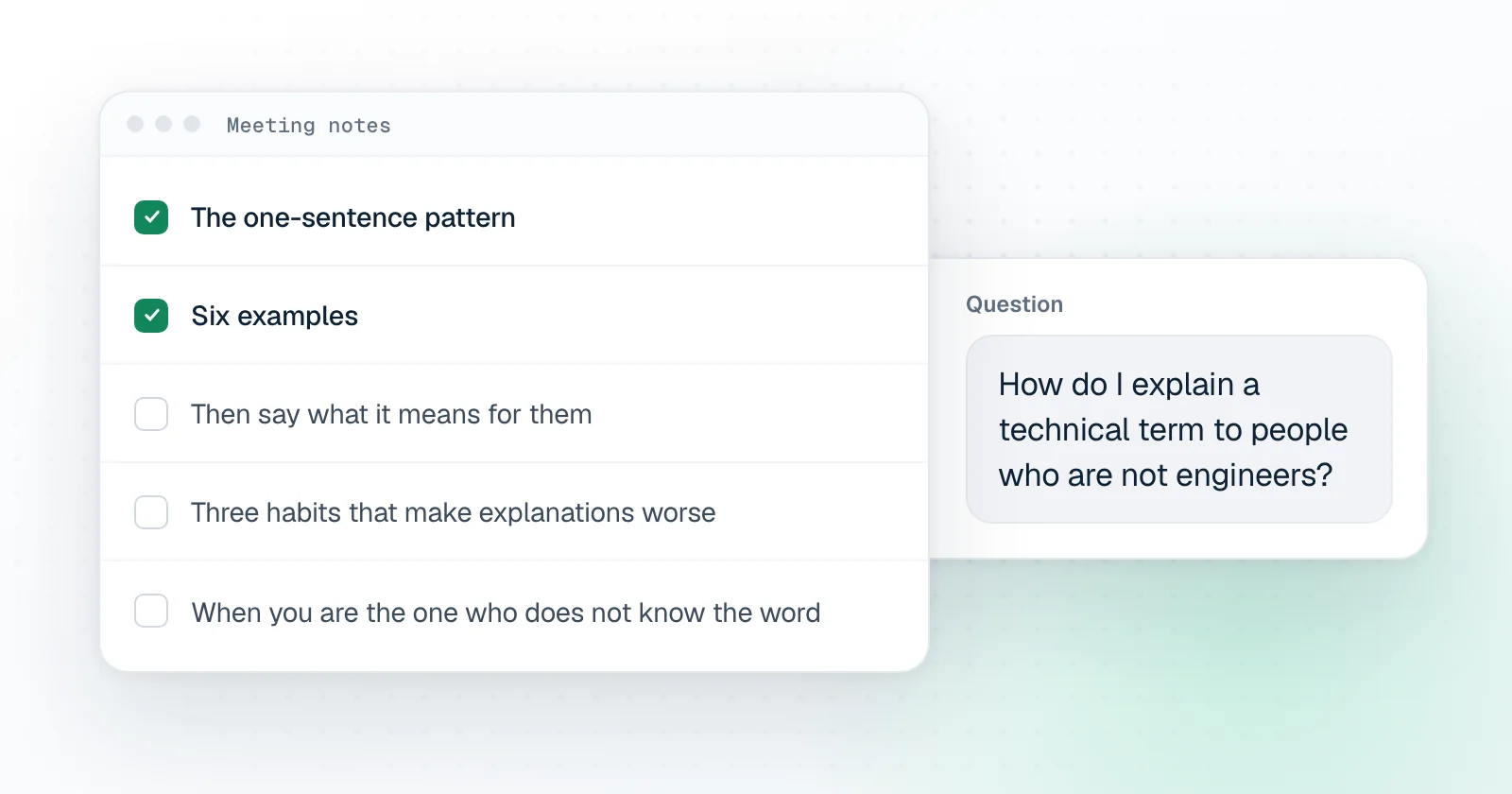
The one-sentence pattern
Name the term, say which everyday thing it is, then say what it protects or makes possible. The term: an everyday thing, so that something good happens or something bad does not.
Six examples
- Idempotency key: a label you send with a payment request so that sending the same request twice counts as one charge.
- Rate limit: a cap on how many requests one customer can make in a period, so that one heavy user cannot slow everyone else down.
- Migration: a scripted change to the shape of the database, run once, so that the code and the data agree.
- Feature flag: a switch that turns a feature on for some users without a new release, so that it can be turned off in seconds.
- Cache: a saved copy of an answer that is expensive to work out, so that the next request is fast. The risk is serving an old answer.
- Race condition: a bug that shows up only when two things happen at almost the same moment, in an order the code did not expect.
Then say what it means for them
The definition is half the answer. The other half is the consequence, in the listener's own work: "For support, this means a customer who clicks Pay twice is charged once." Without that sentence people nod and remember nothing.
Three habits that make explanations worse
- Expanding the acronym and stopping. "SSO is single sign-on" explains nothing.
- Explaining how it works before saying what it is for.
- Stacking qualifiers until the sentence has no claim left in it.
When you are the one who does not know the word
Ask "what does that mean here?". The word "here" matters: a term like "tenant" or "workspace" means something specific in every codebase, and the people who have been on the team for years often disagree about it. Your question will help more people than you.