
Why they ask
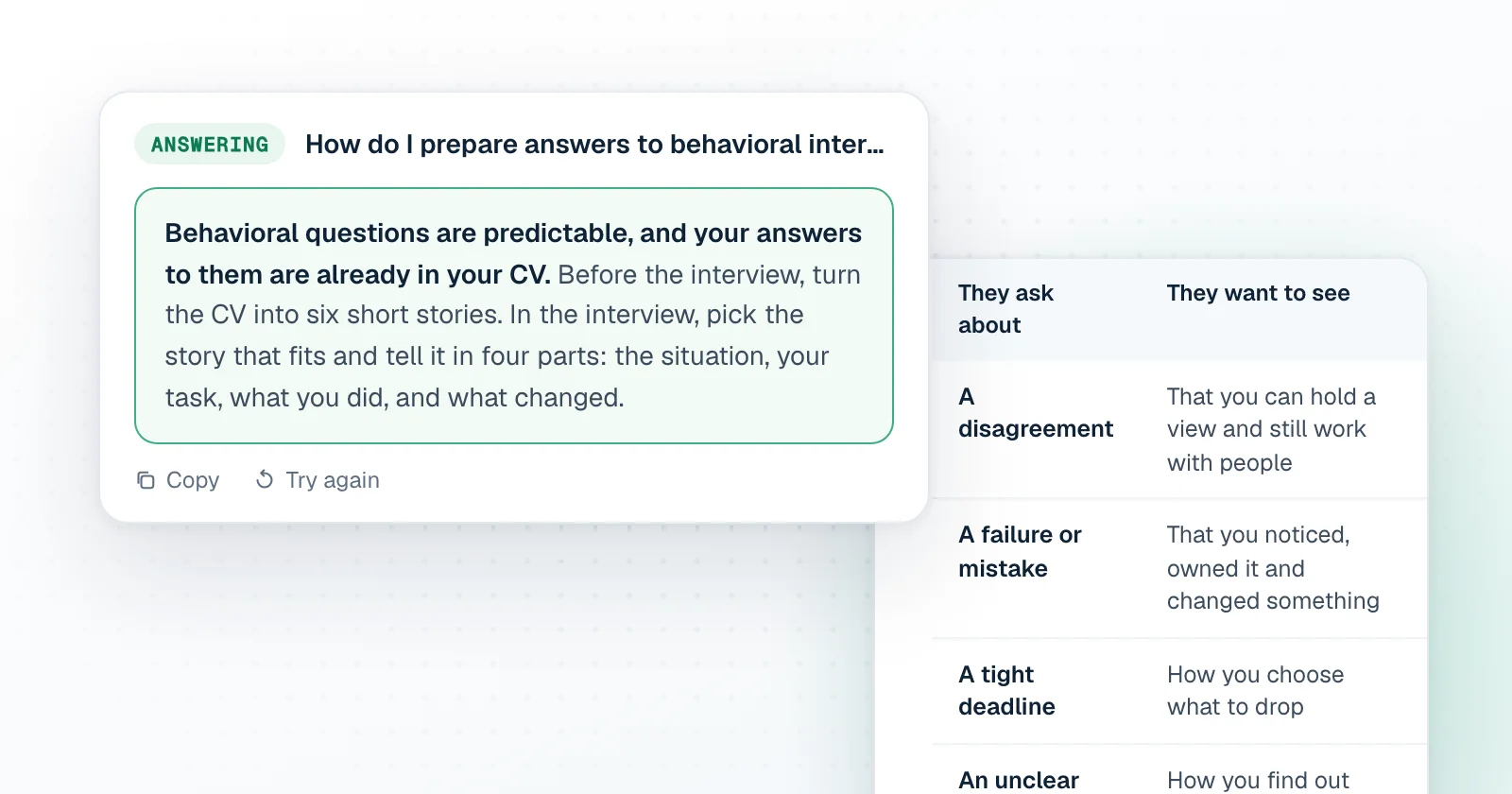
"Tell me about a time when" is a request for evidence. The interviewer wants one real event, what you personally did in it, and how it ended. An opinion about how conflicts should be handled is not an answer, however good the opinion is.
Turn your CV into a story bank
- Take each job on your CV and write down two or three things that actually happened: a launch, an outage, a disagreement, a project that slipped.
- For each one, note what you did, not what the team did.
- Add one number you can defend: time saved, incidents per week, users affected.
- Stop at six stories. Six real ones cover almost every question.
Match stories to themes
| They ask about | They want to see |
|---|---|
| A disagreement | That you can hold a view and still work with people |
| A failure or mistake | That you noticed, owned it and changed something |
| A tight deadline | How you choose what to drop |
| An unclear problem | How you find out what the problem is |
| Leading without authority | How you get things done without giving orders |
Tell it in four parts
- Situation. Two sentences. Where you were and what was going wrong.
- Task. What was yours to do.
- Action. The longest part. Say I, not we.
- Result. What changed, with the number if you have one, and what you would do differently.
Ninety seconds to two minutes is the right length. If you are still describing the situation after thirty seconds, you are telling it backwards.
Expect the follow-up
- What would you do differently?
- What did the other person think?
- How did you know it worked?
A real story survives these. An invented one does not, which is the best reason to use real ones.