
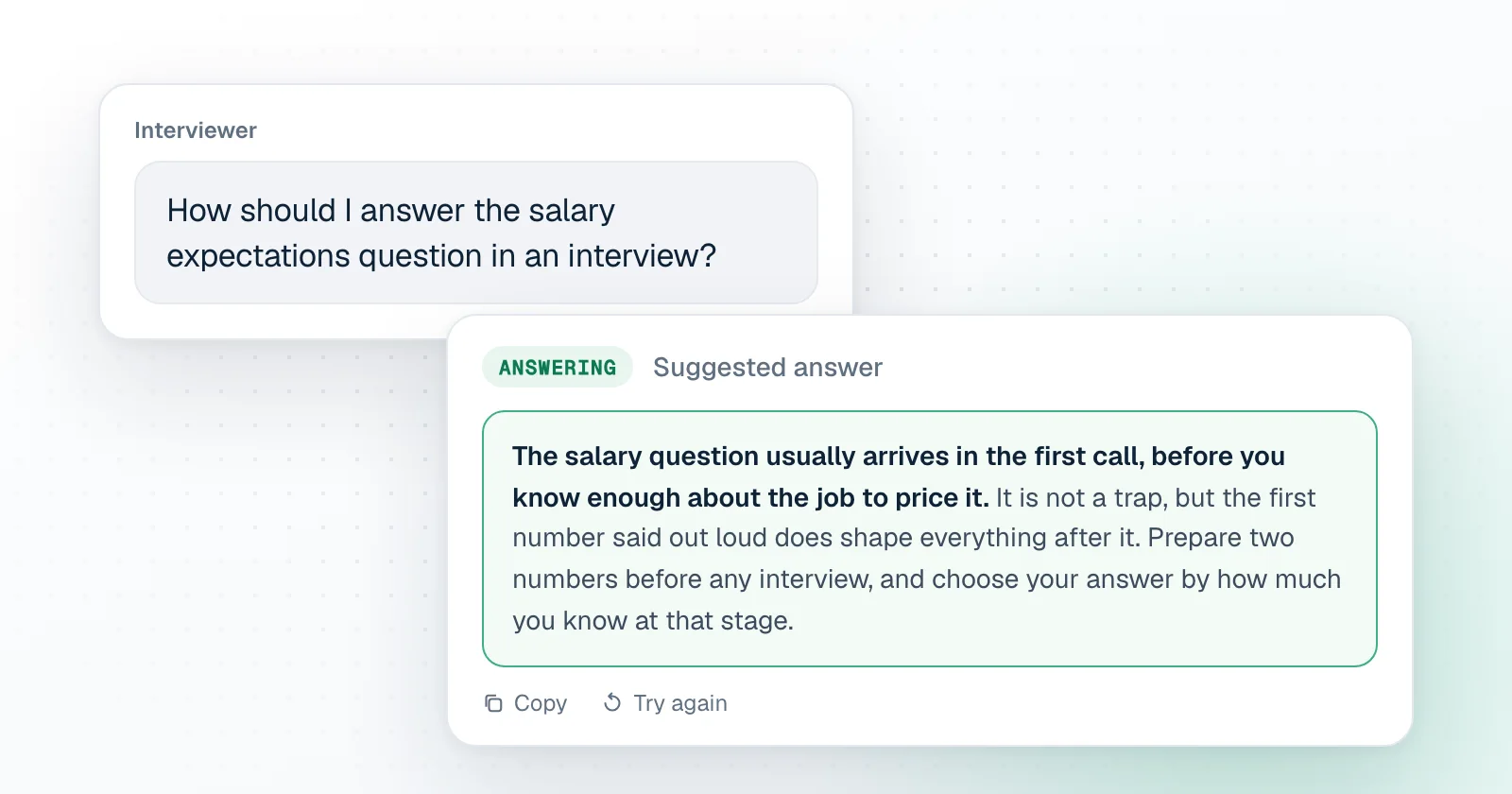
Before the interview: two numbers
- Your target. What the role should pay, from published ranges for the same level, city and kind of company.
- Your floor. The number below which you would say no. Decide it calmly, at home, not in the call.
Many job posts now include a range. Read it before the call. It is the best single piece of information you will get.
Three honest answers
- Early, when you know little: "I would like to understand the role and the level first. Can you share the range for this position?"
- When they have given a range: "That range works for me. Based on my experience, I would expect to be in the upper part of it."
- When you must give a number: "From what I know about the role, I am looking for between X and Y, depending on the whole package." Make the bottom of your range a number you would accept.
Things not to do
- Do not invent a current salary or a competing offer. It can be checked, and it ends offers.
- Do not give a number far below your target to seem easy. It is very hard to move up afterwards.
- Do not refuse to answer three times. After the second ask, give a range.
Remember the rest of the package
Base pay is one line. Bonus, equity, pension contributions, holidays, remote work and working hours can move the real value a lot. Ask for the full offer in writing before you compare or negotiate.
When the offer comes
- Thank them and ask for a day to read it.
- Compare it with your target and your floor, not with your feelings in the moment.
- If you ask for more, ask once, with a number and a reason.
Rules about what an employer may ask, such as your current pay, differ from place to place. If a question seems off, it is fine to say you would prefer to talk about the range for this role.