Look before you ask
- The interview invitation and any candidate guide attached to it.
- The careers page. Some companies publish their interview rules.
- The instructions inside the coding tool, if the round uses one.
Ask the recruiter
Two sentences are enough: "Which tools may I use during the technical rounds? I would like to know whether an editor with completion, documentation or an AI assistant is allowed." It is a normal thing to ask, and asking it reflects well on you.
Reading the answer
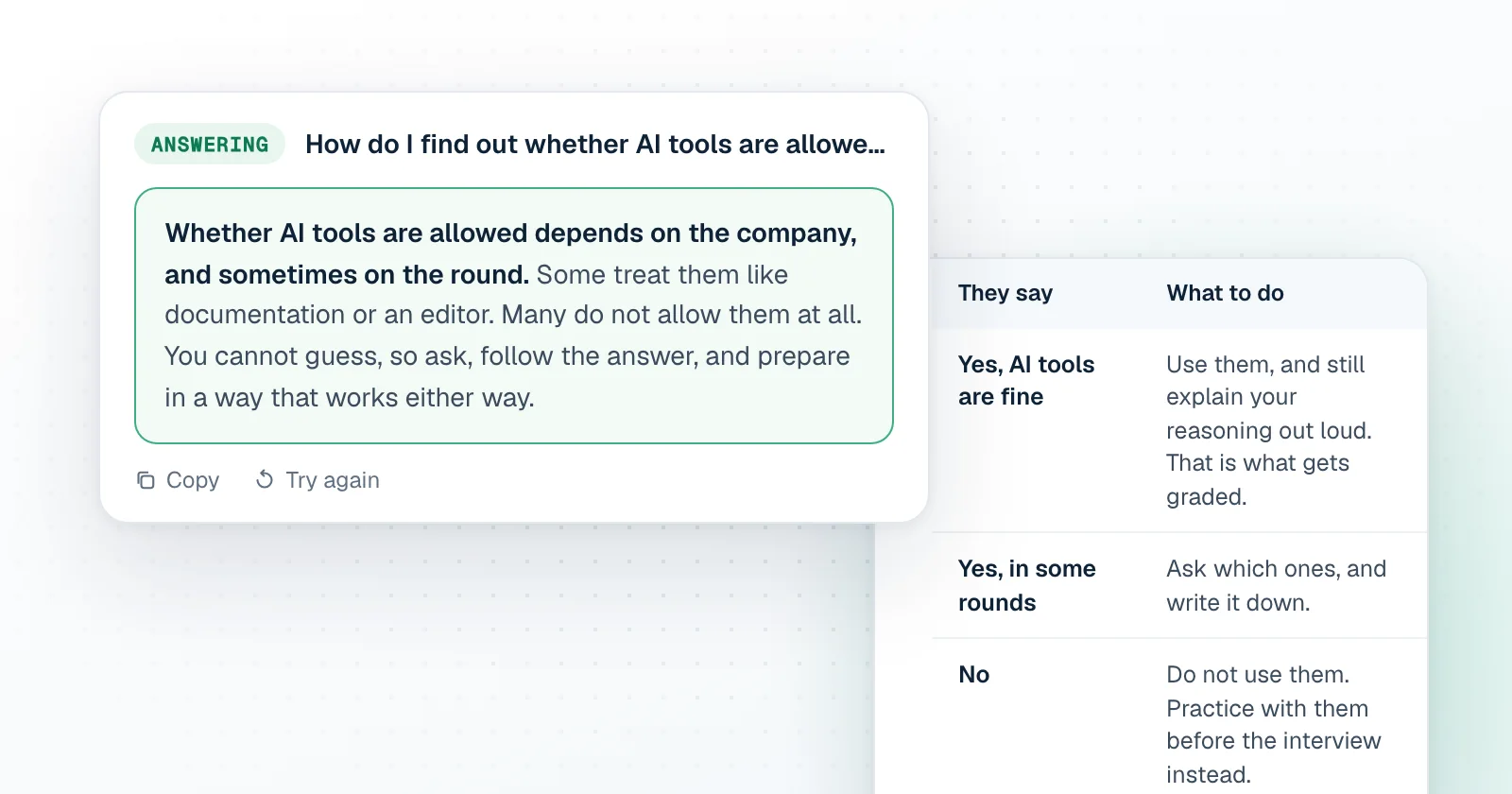
| They say | What to do |
|---|---|
| Yes, AI tools are fine | Use them, and still explain your reasoning out loud. That is what gets graded. |
| Yes, in some rounds | Ask which ones, and write it down. |
| No | Do not use them. Practice with them before the interview instead. |
| Nothing clear | Treat it as no until someone tells you otherwise. |
Why it is worth respecting a no
An interview is a sample of how you will work with these people. Breaking a rule in the sample tells them something you do not want them to learn. And the job you get by it is a job you then have to do without the help.
Preparing when the answer is no
- Practice out loud before the day. Practice is allowed everywhere.
- Build your story bank from your CV, so the behavioral answers are ready.
- Do timed coding problems while talking.
When AI is allowed
Use it the way you would use a colleague: to check an idea, not to replace your own. Read what it gives you, say it in your own words, and be ready to explain every line. An answer you cannot explain is worse than no answer.